
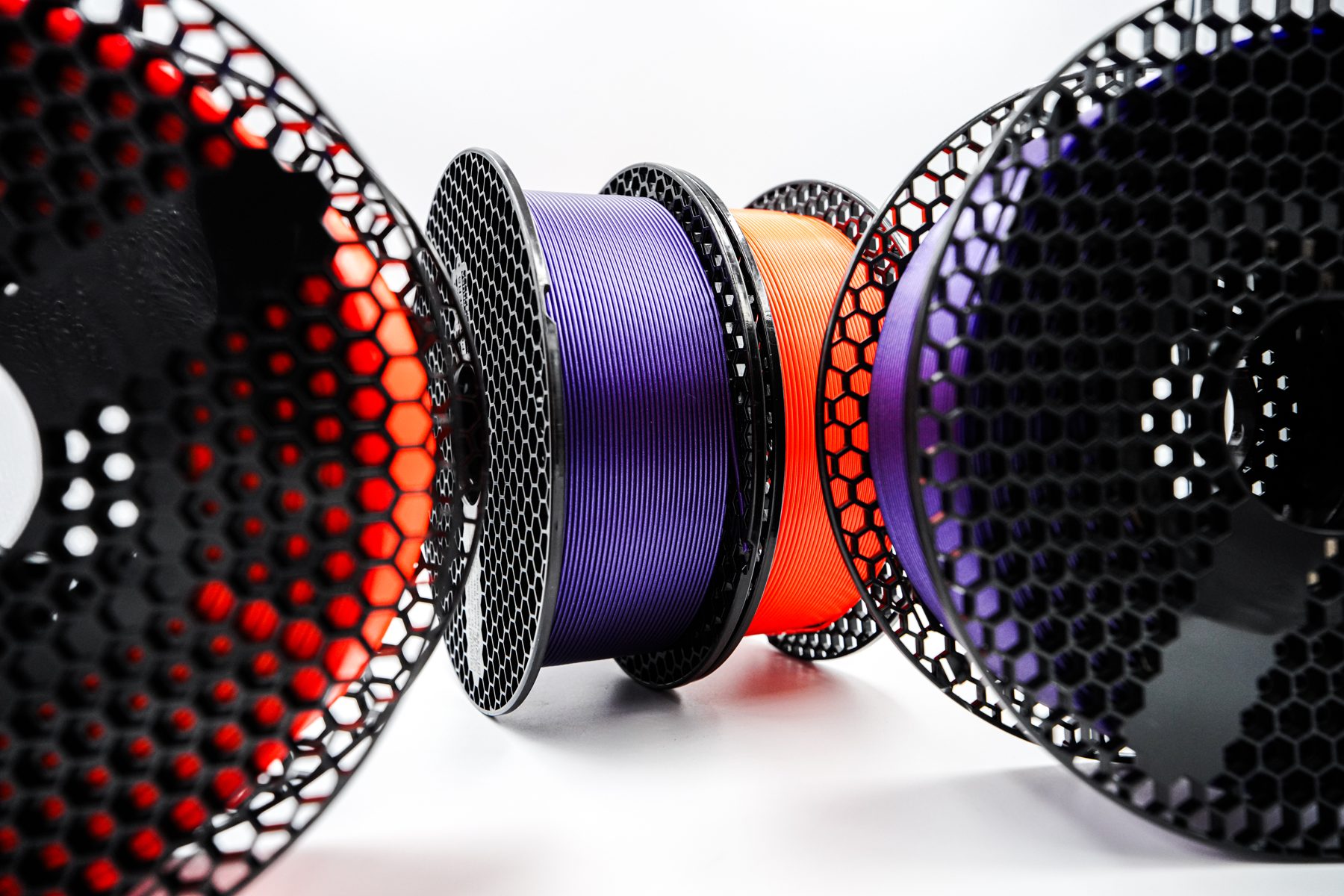
If you are planning a prototype, a small production run, or a one-off display piece, the first question is almost always the same: what will it cost to 3D print in the UAE? The honest answer is that price depends on a handful of factors, so a small bracket and a large architectural model can differ by a factor of a hundred. This 2026 guide breaks down realistic price ranges in AED and the variables that drive them, so you can budget with confidence before you request a quote. Updated October 2026 with a process-by-process and material-by-material breakdown and worked examples built from UAE market ranges.
The short answer
Across the UAE market in 2026, FDM printing is typically quoted from around AED 50 per machine hour with filament at AED 70–185 per kilogram, and SLA or DLP resin printing from around AED 100 per machine hour with resin at AED 185–370 per litre. On those ranges a palm-sized functional prototype in FDM usually lands in the low hundreds of dirhams, and the same part in resin somewhat more once the wash-and-cure step and finer finishing are included. Large, solid or painted parts scale up from there with machine hours, material and finishing labour. These are market ranges for budgeting, not a quote; every real price depends on the geometry of your part, how it is oriented, how much support it needs, the material and the finish, so send the file for a firm figure.
What determines the cost of 3D printing?
Every quote comes down to six variables. Understanding them helps you design smarter parts and avoid surprises:
- Technology. FDM is the most economical; resin (SLA/DLP) and metal cost more per part because of material and machine time.
- Material. Standard PLA is inexpensive; engineering-grade nylon, carbon-fibre composites and castable resins cost several times more.
- Size and volume. Larger, denser parts use more material and hours on the machine, which is the single biggest cost lever.
- Complexity and support. Overhangs and internal geometry need support structures that add material and post-processing time.
- Finishing. Sanding, priming, painting, dyeing or vapour-smoothing are labour steps billed on top of the raw print.
- Quantity and turnaround. Batches lower the per-unit price; rush jobs can carry a premium.
3D printing cost by technology (2026 UAE ranges)
The table below shows indicative machine-time rates and typical material costs. Actual pricing is quoted per part once we see your file, but these ranges are a reliable starting point for budgeting.
| Technology | Indicative rate | Material cost | Best for |
|---|---|---|---|
| FDM (filament) | from ~AED 50 / hr | AED 70–185 / kg | Prototypes, jigs, large parts, display forms |
| SLA / DLP (resin) | from ~AED 100 / hr | AED 185–370 / litre | Fine detail, smooth finish, jewellery masters |
| SLS (nylon powder) | from ~AED 120 / hr | Higher; no supports needed | Functional, durable parts without support marks |
| Metal | from ~AED 200 / hr | AED 1,100–2,570 / kg | End-use metal components, tooling |
As a rule of thumb, if durability and a fine surface matter, SLA resin printing gives the cleanest result, while FDM is the most cost-effective route for larger or budget-sensitive parts.
How each process is priced
The ranges above are easier to use once you know what each process is actually charging you for.
FDM is mostly machine time. Filament is cheap per part, so the hours on the printer dominate. Print time rises with the volume of the part, the amount of infill, the number of perimeters and the layer height you choose. Prusa’s specification for its MK4-series printers, a common desktop machine in UAE service bureaus, lists a build volume of 250 × 210 × 220 mm and layer heights from 0.05 to 0.30 mm; a part printed at 0.1 mm layers takes roughly twice as long as the same part at 0.2 mm, and costs accordingly. Anything larger than the build volume is printed in sections and joined, which adds finishing hours.
SLA is machine time plus resin volume, including supports. Resin is priced per litre and supports are printed in the same resin, so orientation and hollowing matter far more than on FDM. A solid 100 cm³ part and a hollowed version with 2 mm walls can differ by a factor of three or four in resin used. Every resin part also goes through a wash and a UV cure before it is handed over, which is built into the machine-hour side of the quote.
SLS and metal are quoted per project. Powder-bed processes need no supports but carry higher material and machine costs, and are usually only worth it for functional parts or small production runs rather than one-off prototypes.
Finishing is labour. A raw FDM or SLA part is ready to use as a functional prototype straight off the machine. Anything beyond that, such as removing support marks, sanding, filling, priming and painting, is billed by the hour on top of the print. A quick clean-up is minutes; a show-quality painted model can be several hours.
Cost by material
Because the machine hour dominates on FDM and resin volume dominates on SLA, the material you pick changes the price mainly through how it prints, not only through its price per kilogram or litre.
FDM materials
| Material | Effect on print time and cost | Choose it for |
|---|---|---|
| PLA | Fastest and most forgiving, and at the bottom of the AED 70–185/kg filament range; usually the lowest-cost option per part. Prusa’s materials guide notes it softens above about 60 °C, so keep it away from heat. | Concept models, form and fit checks, display forms |
| PETG | Prints at a higher nozzle temperature (250 ± 10 °C per Prusament’s data) and tends to string, so it often needs a little more clean-up time. Tougher than PLA with better temperature resistance. | Functional prototypes, brackets, jigs, enclosures |
| ASA / ABS | Printed in an enclosure to control warping; slower cooling and more conservative speeds mean more machine hours for the same geometry. | Outdoor parts, automotive-style housings, parts that will be sanded and painted |
| Flexible (TPU) | Printed slowly to keep the filament under control, so it is the most time-intensive of the standard materials. | Grips, gaskets, bumpers, wearable prototypes |
| Carbon-fibre and glass-filled composites | Top of the filament price range and need hardened nozzles; reserved for stiff, load-bearing parts. | Jigs, fixtures, drone and automotive brackets |
Prusa Research publishes its own guide to PLA and the Prusament PETG specification if you want the full printing parameters behind these notes.
SLA resins
| Resin | Effect on cost | Choose it for |
|---|---|---|
| Standard grey / white resin | The baseline, at the lower end of the AED 185–370/litre range. Formlabs quotes 62 MPa tensile strength for its Grey Resin V5 when post-cured, and ±0.15% XY dimensional tolerance, which is why standard resin covers most presentation and fit-check work. | Visual models, master patterns, fine-detail prototypes |
| Clear resin | Similar material cost, but usually needs extra finishing hours (wet sanding, clear coat) to become transparent, which is where the price moves. | Lenses, fluidics, light guides, display pieces |
| Engineering resins (tough, rigid, high-temp, castable) | Top of the resin range and often quoted per project; chosen when the part will be loaded, heated or used as a casting pattern. | Snap fits, load-bearing prototypes, jewellery and dental masters |
The mechanical figures above come from the Formlabs Grey Resin page. Which resin a bureau stocks varies, so confirm the grade when you ask for a quote.
Material costs at a glance
Material is often the part of a quote clients least expect. Filaments such as PLA, ABS and PETG typically fall between AED 70 and AED 185 per kilogram. Resin for SLA and DLP printing runs roughly AED 185 to AED 370 per litre, and metal powders are the most expensive input at AED 1,100 to AED 2,570 per kilogram. Choosing a standard material over a specialty grade — when your application allows it — is one of the easiest ways to reduce cost.
A worked example
Say you need a small functional bracket, roughly the size of your palm. In FDM with standard PLA it might take two to three hours of print time plus minimal finishing — an affordable prototype. The same bracket in SLA resin, chosen for a smoother surface, would use pricier material and carry a wash-and-cure step, raising the price. Scale that part up to a half-metre display piece and the material and machine hours multiply accordingly. This is why we always quote per file rather than per gram.
Worked examples from the market ranges
The examples below are illustrations built from the indicative UAE ranges in the table above (FDM from ~AED 50 per machine hour, SLA from ~AED 100 per machine hour, plus material). The print hours and material figures are typical slicer outputs for parts of that kind. They are not 3DWorks quotes and not anyone’s price list; they show how the arithmetic works so you can sanity-check a quote. Your real price depends on the exact geometry, orientation, supports, material and finish.
| Part | Process and assumptions | Machine time | Material | Illustrative range (before finishing) |
|---|---|---|---|---|
| Palm-sized bracket (fit check) | FDM, PLA, 0.2 mm layers, 20% infill, about 2.5 hours, about 25 g | 2.5 h × ~AED 50 = ~AED 125 | 25 g at AED 70–185/kg = AED 2–5 | ~AED 130 |
| Same bracket, smooth surface | SLA, standard resin, about 1.5 hours, about 40 ml including supports | 1.5 h × ~AED 100 = ~AED 150 | 40 ml at AED 185–370/l = AED 7–15 | ~AED 160–165 |
| Phone-sized enclosure lid | FDM, PETG, 0.2 mm layers, about 4 hours, about 45 g | 4 h × ~AED 50 = ~AED 200 | 45 g = AED 3–8 | ~AED 205 |
| 15 cm product model, hollowed | SLA, standard resin, 2 mm walls, about 5 hours, about 110 ml | 5 h × ~AED 100 = ~AED 500 | 110 ml = AED 20–40 | ~AED 520–540 |
| Same model printed solid | SLA, standard resin, same height so similar hours, about 350 ml | ~AED 500 | 350 ml = AED 65–130 | ~AED 565–630 |
| Large housing, 240 × 150 × 100 mm | FDM, PETG, 0.25 mm layers, 15% infill, about 28 hours, about 600 g | 28 h × ~AED 50 = ~AED 1,400 | 600 g = AED 42–111 | ~AED 1,450–1,500 |
Three things stand out. On FDM the machine hour is almost the whole price, so print settings such as layer height and infill move the number more than the material does. On SLA, because the printer works layer by layer, a solid and a hollowed part of the same height take similar machine time, so hollowing saves mostly on resin and, more importantly, on the weight and cure quality of the part. And finishing, which is billed hourly on top of these figures, can double the price of a presentation piece while adding nothing to a functional one. If you are not sure which process suits a job, our rapid prototyping service will recommend one against your file, and if the part still needs modelling, 3D design and modelling is quoted separately from the print.
How to reduce your 3D printing costs
- Right-size the technology. Do not pay for resin detail on a part that only needs to fit and function — FDM may be perfect.
- Hollow where you can. Reducing infill and wall thickness cuts material without always sacrificing strength.
- Batch your parts. Printing several items in one run spreads setup time and lowers the per-unit price.
- Design out supports. Orienting a part to minimise overhangs reduces material and post-processing labour.
- Skip finishing you do not need. A raw functional prototype does not need paint; save finishing for presentation pieces.
FDM vs SLA: which is more cost-effective?
For most budget-sensitive prototypes and larger parts, FDM wins on cost per part. When your project needs crisp detail, a smooth finish or a master model for casting, SLA is worth the premium. If you need production-grade metal or tight tolerances, our CNC machining service is often the better and more economical choice than metal printing.
Get an exact price for your part
These ranges are a guide; the only way to know the real cost is a quote against your file. Send us your CAD or STL and target material, and our Dubai Production City team will come back with a firm price and lead time. You can also browse our full range of 3D printing services in Dubai. Request a free quote here.
Frequently asked questions
What is the cheapest way to 3D print in the UAE?
FDM printing with a standard material such as PLA is the most economical option, especially for prototypes and larger parts where a fine surface finish is not critical.
How much does a 3D printed prototype cost in the UAE?
On 2026 UAE market ranges, a palm-sized FDM prototype typically lands in the low hundreds of dirhams and the same part in SLA resin somewhat higher, before finishing. Larger, solid or painted parts cost more in proportion to machine hours, material and finishing labour; the worked examples above show how each is built.
Why do 3D printing quotes vary so much?
Price is driven by technology, material, part size, complexity, finishing and quantity. A small FDM prototype and a large detailed resin model sit at opposite ends of the range, which is why quotes are given per part.
Do supports count toward the price?
Yes. On FDM, supports add print time; on SLA, they add resin volume and clean-up. Orienting the part well and designing out overhangs is the simplest way to bring both down.
Is 3D printing cheaper than CNC machining?
For plastic prototypes and complex geometries, 3D printing is usually cheaper and faster. For metal parts, tight tolerances or higher volumes, CNC machining is often more cost-effective.
How can I get an accurate price?
Share your 3D file, chosen material and quantity. We quote per part with a firm lead time so there are no surprises.
Prices are indicative 2026 ranges for the UAE market and are provided for budgeting only; your quoted price may vary with file, material and finishing.


