
Choosing between 3D printing vs CNC machining is one of the most common questions we hear from engineers, designers and product teams across the UAE when a new prototype lands on their desk. Both processes can turn a CAD file into a physical part, but they get there in opposite ways, one adds material layer by layer, the other removes it from a solid block, and that fundamental difference shapes everything from cost and lead time to strength and finish.
This guide walks through how the two processes compare, when each one makes sense for your prototype, and how to decide quickly without overspending or waiting longer than necessary. If you’re weighing up a prototyping decision right now, this should give you a clear answer by the end.
How 3D Printing Works
3D printing, most commonly FDM (Fused Deposition Modelling), builds a part by depositing material layer by layer from a digital file, with no tooling and almost no design restrictions. Complex internal geometry, organic shapes and multiple parts can be produced in a single print run, and design changes cost nothing but a new file. Our FDM 3D printing service in Dubai covers materials from standard PLA through to engineering-grade nylon and ABS.
The trade-off is material choice and finish. 3D-printed parts in common plastics generally don’t match the strength, tolerance or surface quality of machined metal or engineering plastic, and layer lines are usually visible unless additional finishing is applied.
How CNC Machining Works
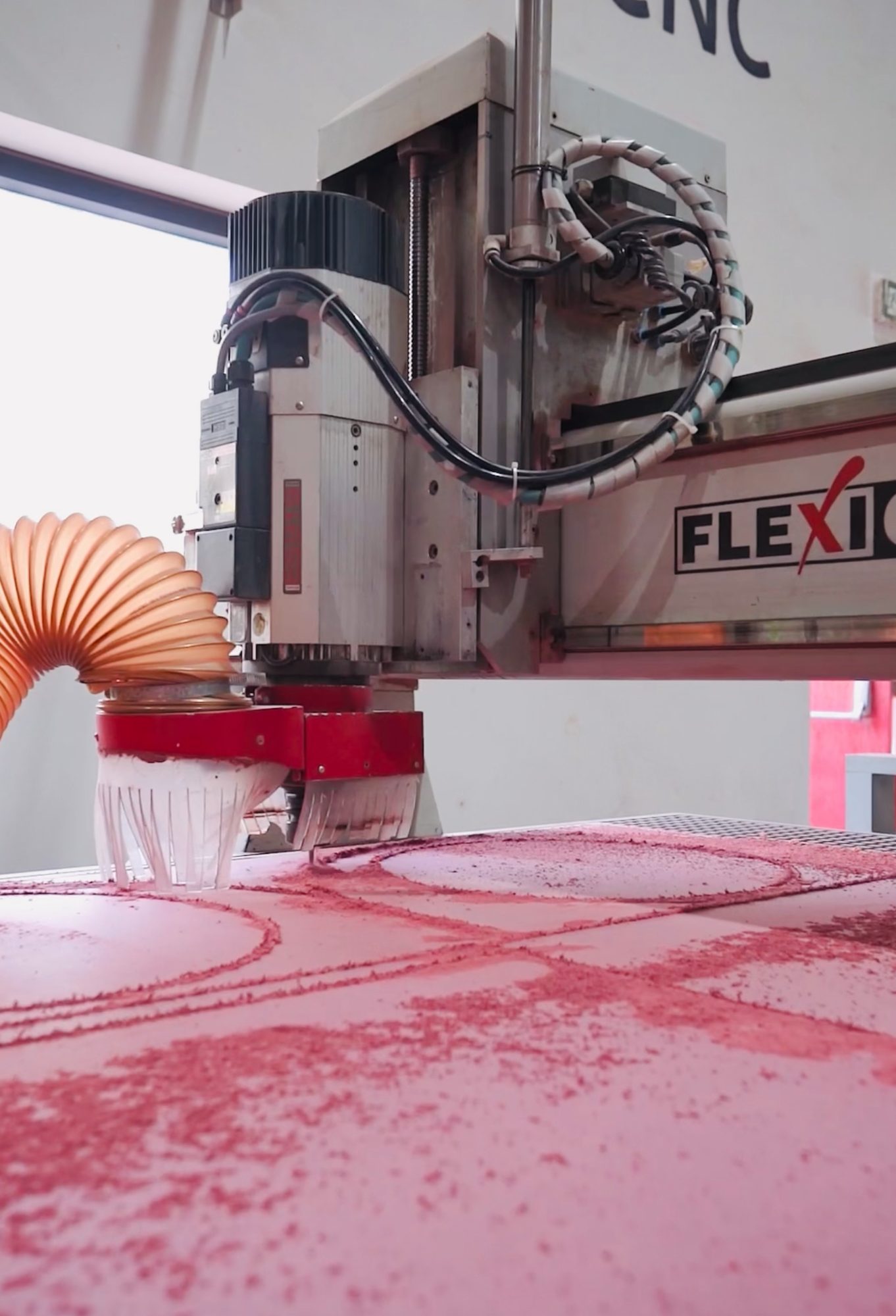
CNC (Computer Numerical Control) machining removes material from a solid block of metal or plastic using precision cutting tools, guided by a digital programme. Because it starts from solid, fully-dense stock, CNC-machined parts have the mechanical properties of the parent material, whether that’s aluminium, steel, brass or engineering plastics like Delrin and PEEK, along with tight tolerances and a professional surface finish. Explore our CNC machining service in Dubai for the full list of materials and finishes we offer.
The trade-off is design freedom and cost at low volumes. Some geometries, such as deep internal cavities or complex organic curves, are difficult or impossible to machine, and CNC generally costs more per part for one-off or small-batch prototypes due to setup and machining time.
3D Printing vs CNC Machining: Key Differences
| Factor | 3D Printing | CNC Machining |
|---|---|---|
| Process | Additive (builds up layer by layer) | Subtractive (cuts away from solid stock) |
| Materials | Plastics (PLA, ABS, PETG, Nylon, resin) | Metals and engineering plastics |
| Tolerance | Good, ±0.2-0.5mm typical | Excellent, ±0.05mm achievable |
| Surface finish | Visible layer lines unless post-processed | Smooth, professional finish as standard |
| Design freedom | Very high, complex geometry possible | Limited by tool access and cutting angles |
| Cost for 1 part | Lower | Higher (tooling and setup time) |
| Cost at volume | Scales linearly | Can become more cost-effective per part |
| Lead time | Same day to 72 hours typical | Slightly longer due to programming and setup |
When 3D Printing Is the Better Choice
Reach for 3D printing when speed and design iteration matter more than final material properties. It’s the natural choice for early-stage prototypes where you’re still validating form, fit and concept. Typical scenarios include:
- Early concept models and design validation
- Complex geometry that would be difficult or costly to machine
- Multiple design iterations in a short timeframe
- Low-volume plastic parts where visible layer lines aren’t a dealbreaker
- Fit-check models and assembly mock-ups
When CNC Machining Is the Better Choice
CNC comes into its own when the prototype needs to behave like the final production part, particularly if that part will be machined in metal at production stage. It’s also the better route when tight tolerances or a specific material grade are non-negotiable. Common scenarios include:
- Functional prototypes that need to match final production material
- Parts requiring tight tolerances or precision fits
- Metal components for testing under load, heat or wear
- Parts that need threading, tapping or machined features
- Prototypes that will go straight into a working assembly or test rig
Cost and Turnaround for UAE Projects
For a single prototype, 3D printing is almost always the more economical and faster option, with our Dubai Production City team typically turning around FDM parts in 24 to 72 hours depending on size and complexity. CNC machining usually involves a longer lead time due to programming and fixturing, and per-part costs are higher for one-offs, but that gap narrows as quantities increase, since machining doesn’t carry the same per-part material and print-time cost that additive processes do.
If budget and timeline are tight but you’re not yet sure which material the final product will use, 3D printing a first-pass prototype before committing to a CNC run is often the smartest way to de-risk the project.
Can You Use Both in the Same Project?
Frequently, yes. Many of our clients start with a 3D-printed prototype to validate form and fit quickly and cheaply, then move to CNC machining once the design is locked, either for a final functional prototype or a short production run. This staged approach avoids paying machining costs on a design that’s still likely to change.
Frequently Asked Questions
Is CNC machining more accurate than 3D printing?
Yes, generally. CNC machining typically achieves tolerances around ±0.05mm, compared with ±0.2-0.5mm for standard FDM 3D printing, making it the better choice when precision fits or tight tolerances are critical.
Which is cheaper for a single prototype?
3D printing is usually cheaper for a single part or small batch, since CNC machining involves setup and programming time that adds fixed cost regardless of quantity. That gap can close at higher volumes.
Can 3D printing replace CNC machining entirely?
Not for every application. 3D printing is excellent for design iteration, complex geometry and low-cost plastic prototypes, but CNC machining remains the better option when you need metal parts, tight tolerances or production-representative material properties.
Which process is better for functional testing?
It depends on what you’re testing. Use 3D printing for fit, form and early functional checks in plastic; use CNC machining when the part needs to withstand real mechanical, thermal or chemical loads similar to the final production material.
Not sure which process fits your prototype? Our Dubai Production City team can review your design and recommend the fastest, most cost-effective route. Request a free quote and we’ll get back to you with material and process options for your part.


