
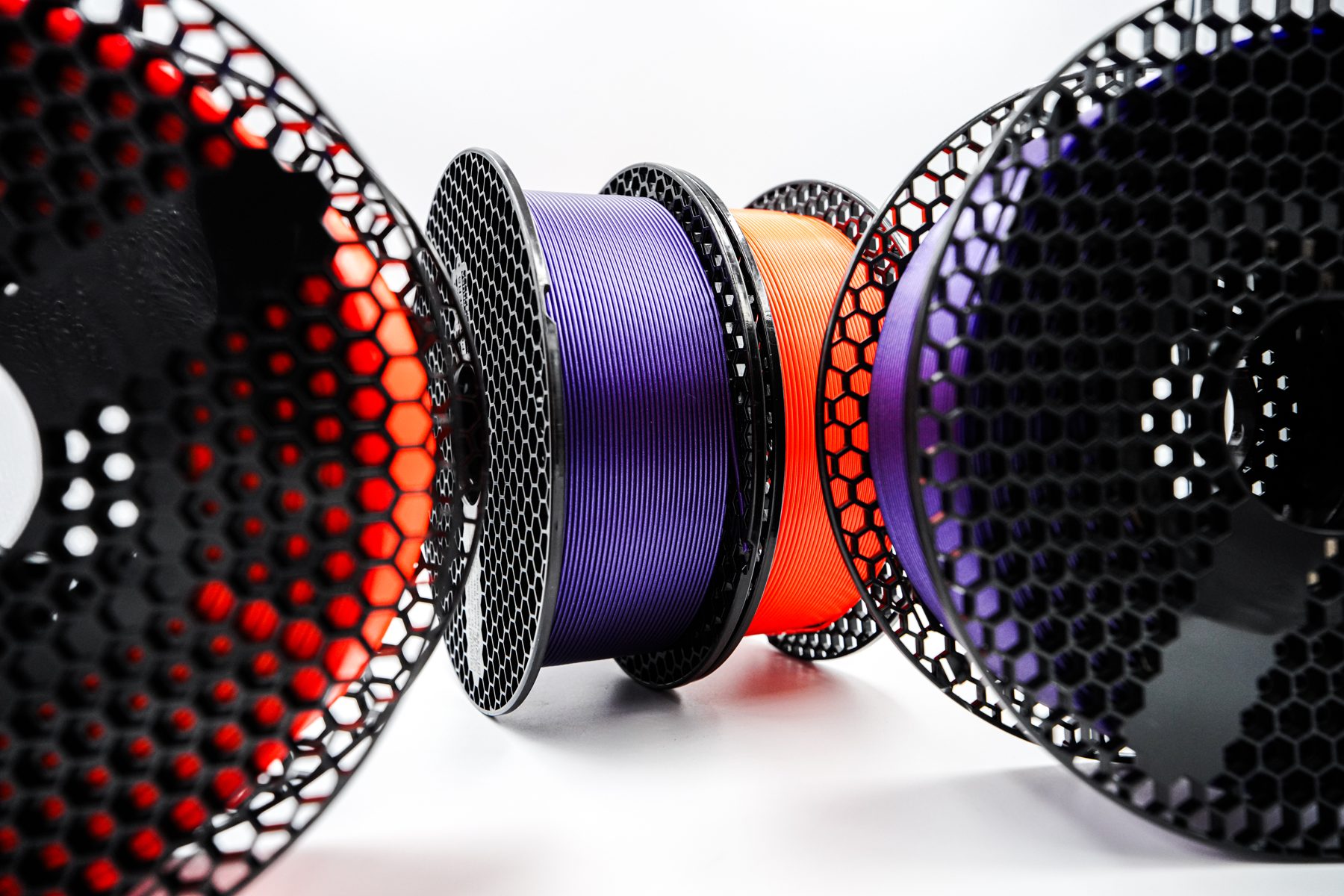
Choosing the right material is the single biggest decision you will make on any 3D printing project. Pick well and your part is strong, accurate and affordable; pick poorly and you end up with warped prototypes, brittle brackets or enclosures that sag in a hot car. If you have been comparing 3D printing materials in Dubai and wondering whether PLA, ABS, PETG or Nylon is right for your job, this guide gives you a clear, practical answer.
Below, our Dubai Production City team explains how each of the four most common FDM thermoplastics behaves, what it costs in AED terms, where it shines in the UAE climate, and how to make the final call for your prototype or end-use part.
Why material choice matters more than the printer
Two parts printed on the same machine can perform completely differently depending on the filament loaded into it. Material determines stiffness, impact resistance, heat tolerance, surface finish and even how much post-processing a part needs. It also drives cost: engineering-grade filaments can cost several times more than standard ones, and some demand heated chambers or drying that add time to your turnaround.
That is why we always start quotes with one question: what does the part actually need to do? A visual model for a client meeting has very different requirements from a jig that lives on a production line. Once the function is clear, the material usually selects itself.
PLA: the everyday workhorse for models and concepts
PLA (polylactic acid) is the most widely used 3D printing material in the world, and for good reason. It prints easily, holds crisp detail, comes in a huge range of colours and is the most economical option on our price list. For concept models, architectural studies, product mock-ups and display pieces, PLA is almost always the right starting point.
Its main limitation is heat. PLA begins to soften at around 55–60°C, which matters in the UAE: a PLA part left on a dashboard or in an unshaded delivery van in August can deform. It is also more brittle than the other materials here, so it is not ideal for snap-fit clips or parts that take repeated impact.
ABS: tough, heat-resistant and easy to finish
ABS (acrylonitrile butadiene styrene) is the same plastic used in LEGO bricks and car interior trim. It tolerates heat to roughly 95°C, takes knocks without cracking, and can be sanded, drilled, painted and even vapour-smoothed to a glossy, injection-moulded look. That makes it a favourite for enclosures, automotive brackets and functional housings.
The trade-off is printability. ABS shrinks as it cools, so large parts need enclosed, temperature-controlled printers to avoid warping — equipment we run as standard on our FDM 3D printing service in Dubai. For most clients the practical answer is simple: let a bureau with the right hardware handle ABS rather than fighting it on a desktop machine.
PETG: the balanced all-rounder
PETG (glycol-modified PET) sits neatly between PLA and ABS. It is nearly as easy to print as PLA but far tougher, slightly flexible rather than brittle, resistant to water and many chemicals, and comfortable up to about 75°C. It is our default recommendation for functional prototypes, liquid-contact parts, outdoor fixtures and signage components that need to survive Dubai summers without the cost of engineering filaments.
PETG’s surface has a slight gloss and it does not sand as cleanly as ABS, so for parts that will be painted to a showroom finish we often steer clients back to ABS. For parts that simply need to work, PETG is hard to beat on value.
Nylon: engineering strength for demanding parts
Nylon (polyamide, typically PA6 or PA12) is the strongest of the four. It combines high tensile strength with outstanding wear resistance and a natural slipperiness that suits gears, hinges, bushings and load-bearing clips. It also handles sustained heat around 100°C and shrugs off vibration and repeated flexing that would crack other plastics.
Nylon is genuinely demanding to print — it absorbs moisture from the air within hours and must be dried and printed in controlled conditions — which is why it costs more and why we reserve it for parts that truly need engineering performance. When a client asks for a functional part that will be used daily for months, Nylon is usually the answer.
PLA vs ABS vs PETG vs Nylon at a glance
| Property | PLA | ABS | PETG | Nylon |
|---|---|---|---|---|
| Strength | Moderate | Good | Good | Excellent |
| Heat resistance | ~55–60°C | ~95°C | ~75°C | ~100°C |
| Flexibility | Brittle | Moderate | Slightly flexible | Very tough |
| UV / outdoor use | Poor | Fair | Good | Good |
| Ease of finishing | Good | Excellent | Fair | Fair |
| Relative cost (AED) | Lowest | Low–mid | Mid | Highest |
| Best for | Models, mock-ups | Enclosures, painted parts | Functional parts, outdoor | Gears, load-bearing parts |
How to choose for UAE conditions
Heat and sun are the deciding factors more often here than anywhere else we know. As a rule of thumb: if the part stays indoors and is mainly visual, choose PLA and save money. If it will be painted or must survive knocks, choose ABS. If it lives outdoors, near water or in a warm workshop, choose PETG. If it transmits load, wears against another part or must not fail, choose Nylon.
Quantity matters too. For one-off prototypes the filament cost difference is a few dirhams and you should simply pick the best material for the job. For batches of fifty or more, material choice meaningfully moves the total price, and our team can often suggest a design tweak that lets a cheaper material do the same work. You can read more about all the processes we run — including SLA resin printing and CNC machining for parts that FDM cannot serve — on our technologies page.
Frequently asked questions
Which 3D printing material is best for outdoor use in Dubai?
PETG is the best value choice for outdoor parts in the UAE. It resists UV and moisture well and stays stable in summer heat. For structural outdoor parts under load, Nylon is the stronger option.
Is PLA strong enough for functional parts?
For light-duty parts used indoors at room temperature, often yes. But PLA is brittle and softens near 60°C, so for anything that flexes, clips or sits in a hot environment we recommend PETG or ABS instead.
How much do 3D printing materials affect the price?
Material typically accounts for a modest share of a quoted price — machine time and finishing drive most of the cost. Moving from PLA to Nylon might add tens of dirhams on a small part, so choose the material the application needs rather than the cheapest.
Can you advise which material suits my project?
Yes. Send us your CAD file or even a sketch with a note on how the part will be used, and our engineers will recommend the right material and process with a same-day quotation in AED.
Ready to put the right material to work? Our Dubai Production City team prints PLA, ABS, PETG and Nylon daily, with fast turnaround across the UAE. Request a free quote and we will recommend the best material for your part, no obligation.


